Our Common Heritage

Could every being and species on the earth share a common inheritance? A common heritage that dates back to the beginning of the cosmos and follows the history of the universe unfolding. Could this legacy be embedded deep in our cells?

Thomas Berry, revered visionary and ecotheologian wrote about this sacred relationship between all beings and the cosmos. He understood the relationship between the natural world and humans to be a symbiotic one and that with the destruction of the natural environment goes the demise of humans. He spoke of the earth and its many species as “a communion of subjects not a collection of objects” and called this communion, the earth community. How much more magnificent does the earth seem when it is viewed with such beauty? Berry, along with other eco-spiritualists, described an earth-based spirituality that included the sacred in all living beings, human and non- human.

Recently I saw an American poet Drew Dellinger, speak in Guelph. His poetry combines cosmology and ecology in a way that forces us to wake up to the environmental destruction that we have created. His work is influenced largely by writers like Berry. The story of the universe, Dellinger tells, has been understood in a very physical, scientific approach with little relevance placed on any sacred meaning to the wondrous magnificence of the universe unfolding. Our story, he says, is one of human supremacy that separates us from each other and the other species on the planet. This story has allowed us to dominate and control nature because we see this as our human right that deems us superior and it is these beliefs have created the current ecological crisis.

Can we see embrace this new sacred story? The world came into form billions of years ago, starting an evolution to where we are now. We are all inherent cosmological dust manifested in varying physical form. Thomas Berry wrote that every being is a mode of the divine, meaning every animal, human and plant form. Who are we then? We are everything that was, is and will be. Berry asked, “Is stewardship enough? Do we need a more profound identity with the natural world, one that sees human and other earthly beings as members of a single community?” If we chose to believe that everything is sacred and connected, we could envision this new earth story.

Matthew Fox, renegade theologian and venerable force of the creation spirituality movement, writes “that people are born mystics – we are all mystics as children, but it’s taken away from us as we grow older. It’s taken away subtly by education which trains the left brain and ignores the right brain. They take away your crayons right when you need them most – at puberty. When you should be getting to your cosmic soul they give you football and shopping-malls. And that’s what religion won’t tell you – that we’re losing the planet. We have everything to lose, it’s basic. And that’s why the only resolution is an awakening of gratitude and reverence for the planet, and falling in love in more than an anthropocentric fashion.”

Could the spiritual be the missing piece to the ecological movement? We could transform our human and earth relationship to one of wonder and deep association. I have to ask where are our religious leaders and why have they not seen this profound connection? If everything is the divine unfolded in different form, then this becomes a moral issue for many. How would this affect our economic and political outcomes? I think we could fall in love with nature and connect with the deep mysteries of the universe in every sacred, drop of water, tree, every animal and the very earth itself? Imagine if all the world’s religious leaders implemented this principle in their churches, temples and mosques.

Dellinger asks, “what kind of ancestors are we to this planet that has sustained us? We are changing the earths climate. In 13.7 billion years this will be our legacy. This is what we will be judged by.” He finished with his poem Hieroglyphic Stairway, “ It’s 3:23 in the morning and I am awake because my great, great grandchildren won’t let me sleep. They will ask me in my dreams. What did you do when the earth was unraveling. What did you do while the planet was plundered? Surely you did something when the seasons were failing? What did you do once you knew?”
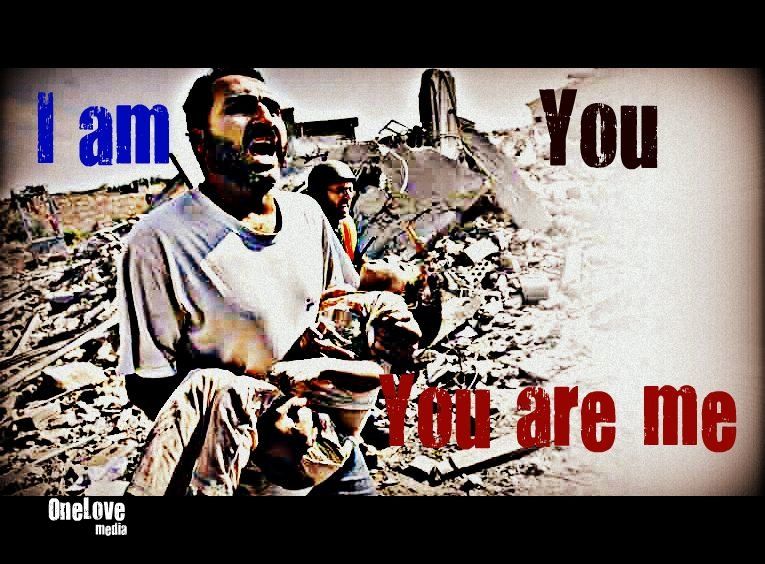
Seen a lot of gratuitous violence on Tv lately? Watched any war movies? Played any homicidal video games? Eaten any meat? Violence is so ingrained in our society, that we are quite comfortable with it and are even entertained by it. Some would say that violence is a natural part of humanity but what about a culture of peace? Does this sound like flaky, hippy jargon? Mother Theresa wrote that “If we have no peace, it is because we have forgotten that we belong to each other”. We are only beginning to understand this.

Physicsts are discovering that everything begins with a thought and that our thoughts carry energy. Japanese scientist, Masuru Emoto, studied how water molecules change shape because of our thoughts. Different intentions directed towards the water caused it to change its shape. Dr. Emoto discovered that crystals formed in frozen water changed when specific thoughts were directed towards them. He found that water from clear springs and water that has been exposed to loving words shows “brilliant, complex, and colorful snowflake patterns. In contrast, polluted water, or water exposed to negative thoughts, forms incomplete, asymmetrical patterns with dull colors”. This is amazing when we consider we are made of 75% water.

Is it possible that our thoughts have shaped the world as we know it? Our prevailing beliefs of scarcity, powerless and fear have created conditions of poverty and war. We sink a lot of money and effort into these things and all these problems still exist on our planet. We are doing something wrong. We’ve attacked these problems through economics, politics and war. But the world’s problems might be instead rooted in the spiritual and need to be addressed through a different lens. This must seem very naïve. How weird is our normalization of violence?

Recently, I particpated in a exercise that asked you to think of directing a very positive thought to someone and visualize sending this thought to them and consider how this made you feel. Then try it again remembering a time when you hurt someone and consider what you said and then noting how this made you feel. This was a powerful exercise. The positive thoughts encouraged the feeling of an opening of my heart and I felt a sense of magnaminous power. The other experience left me feeling like a victim and trapped in myself as opposed to opening myself to the universe. It made me realize how much kind acts affects others and my own sense of personal power. It made me consider what am I sending out to the planet. What if our thoughts are creating our reality?

We have believed in scarcity, competition and that we are intrinsically bad. These belief systems have created oppression, destruction, materialism, racism and fear. What if we chose to think interconnection, co-existance, shared power, and inherant goodness. What are we doing by entertaining ourselves through graphic depictions of violence, buying our children violent video games, raping our agricultural lands, polluting our environment and torturing animals for food you can live without. Tich Nhat Hanh writes that “the roots of war are in the way we build our daily lives- the way we develop our industries, build up our societies and consume goods.” To want non- violence we need to be non- violent.

We could try and see all life existing as part of the same collective entity. That we are spiritually, all one. We are all part of one big lifeforce. Would it be so hard to see yourself, in your irritating neighbour, the homeless man walking by you, in the tree providing you with oxygen, or in the pig destined for the slaughter house? We all exist wanting to be alive and experiencing life. Can we think empathy and kindness instead of judgment and separtness? Why are we better than anyone else? Why are we superior to animals? Do you want peace? Then ask yourself, how can I contribute to a culture of non- harm? All it requires is your thoughts.

Who are you? Some might define themselves as, I am my body, my thoughts, my possessions, my accomplishments or my cultural origins. We tend to describe ourselves by some external qualities and use these to distinguish ourselves from others. We cling to these and hold a lot of importance to this reality secretly hoping we can say, “I’ m a somebody”. This makes up our separateness – what we can see, hear, touch and accumulate, but what if this isn’t who we are at all? These things make up the human experience but is this all an illusion?

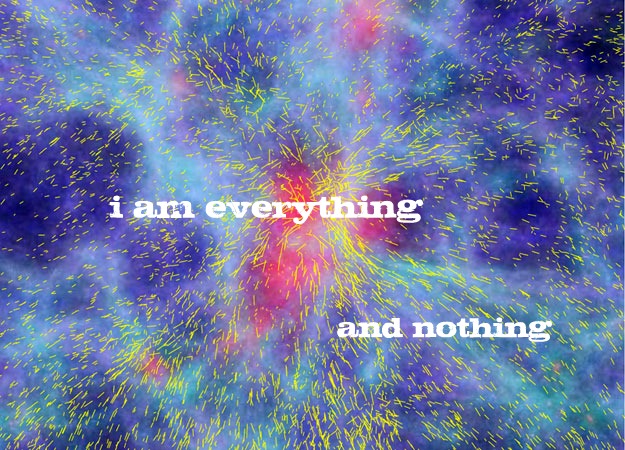
If you are not these things, then who are you? Everything that we consider “the self” is impermanent. Your body, your possessions, your friends and family. Nothing lasts forever. The self will drop away and the physical body will die but is it ever lost? No, it is still with us. It becomes the soil, then part of a tree, then becomes the oxygen we breathe from that tree that sustains us. Nothing is really lost because form transforms itself. Love teaches you, that you are everything. Wisdom teaches you that you are nothing. We are both.

If “the separate self” is an illusion then what is there? Maybe only oneness. Perhaps, we are all different expressions of the same life force. If we can detach from our external human reality for a minute and consider the possibility that we are not our body, thoughts or possessions and that we are something more, akin to a stillness that connects us to all living beings. We are one life force experiencing humanness through many different ways. The I becomes We and nothing and no one is ever lost or separated from us. It’s a beautiful thought. Every being is united.

The Buddhist monk, Thich Nhat Hanh explains how a piece of paper contains the universe. Look at the paper, stare until you see a cloud, then look for the sun in the paper, the rain that fell and the trees that grew. Now see the logger who cut down the tree that made the paper and the food that nourished him. The logger’s father and mother are in it too for without them we would not have this paper. We can see that this paper cannot exist without all of these things. When you look at this paper, we can see ourselves in it too. My words are in it and your perceptions of them. This paper is no longer a separate object, it is made up of the earth, the rain, the sun, the cloud, and so on. We are all connected.

Free yourself from the confines of the self. You are not your body, your possessions or your thoughts. With this reality you can walk lighter when you know that you are something already perfect that does not need to be defined by external accessories. You can express yourself through these things but know that they are not you. We are everything and nothing at the same time. We are connected to each other, whether we like it or not. The good, the bad and the ugly are all one.

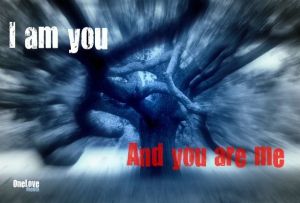
Buddhists meditate, “May all beings be safe, May all beings be happy, May all beings be healthy, May all beings have ease of well being”, this includes all beings, beings of the earth, beings of the air or of the water. Let us try to respect all other living beings more, walk away from your ego more, love your neighbours more, be kinder to your kids more, say your sorry more and offer help more. I am you and you are me.


treeChange starts with our children and what we are teaching them. This is an exciting time in history because major changes are taking place. The old world order paradigm of “us versus them” is falling away to a new world ideal of “co-existence”. We all share this planet and realize that we are a global people living in a fish bowl together. We are realizing that the “them” of the other people, the environment and animals have the same needs as we do and that their health and prosperity affects our survival. The belief in separateness and human superiority has created an unhealthy planet. How many of us want an end to global warming, to bestow a healthy planet for our children, to end poverty and violence? This is our collective wish and so our paradigm is shifting.

Children today are growing up with a much different view of the world. They hear the doom and gloom of their existence. Many are probably afraid for their future. They are taught how living things are co- dependant with each other and that the environment needs to be healthy for us to survive. What would the world look like if everyone believed that we are all connected? That we don’t need to “pillage and burn” to get our needs met.

Respect of the co- existence of animals, people and the environment will shift our consciousness. It is the concept that will change the world. Interdependence can be the new nationalism. This idea needs to be infused in every aspect of society for children to feel safe. It has to be reflected in our government, society and our homes. We need our children to know that we will take care, we will look after, and we will respect each other’s need to prosper. How long will we live in fear? What kind of world do we want to create? The choice is ours. Change can be now.

I am you -You are me.